Iraq's top court rules Baghdad can take over Kurdish borders and oilfields
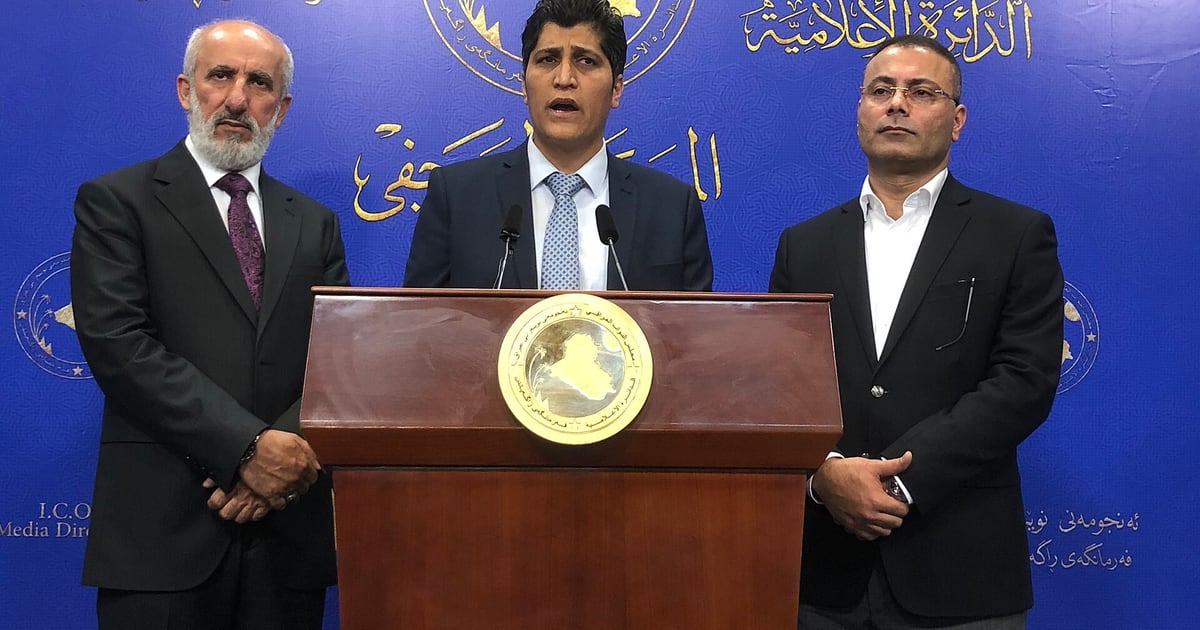
Federal authorities closed two crossings with Iran and Syria as thousands protested the directives in Erbil.


Listen
The rundown
- Iraq's Federal Supreme Court ruled on Wednesday, Nov. 25, that Baghdad holds constitutional authority to supervise Kurdish border crossings, deploy troops nationwide, and oversee oil and gas revenues.
- The ruling backed orders issued on Tuesday, Nov. 24, by Prime Minister Ali al-Zaidi directing federal authorities to take over regional crossings and oilfields in four disputed northern provinces.
- Federal authorities closed two border crossings connecting the Kurdistan region with Iran and Syria on Thursday, Nov. 26, as thousands protested in Erbil against Baghdad's directives.
- The Iraqi federal government estimates that 200,000 to 230,000 barrels of oil per day are smuggled from northern areas, worth roughly $200 million a month.
- The Kurdistan Regional Government rejected both the prime minister's orders and the court ruling as unconstitutional violations of regional autonomy.
Iraq's federal government closed two border crossings in the Kurdistan region connecting with Iran and Syria on Thursday, Nov. 26, moving to enforce a federal takeover of northern customs posts and oilfields. As federal authorities shut the gates, thousands of Kurdish residents took to the streets of Erbil to protest Baghdad's directives.
The closures and demonstrations followed a three-day push by Baghdad to assert control over contested territory and revenues. On Tuesday, Nov. 24, Iraqi Prime Minister Ali al-Zaidi ordered federal agencies to take over all border crossings into the Kurdistan region and close unofficial smuggling routes. Al-Zaidi also directed the federal Oil Ministry to assume management of oilfields in the disputed northern provinces of Kirkuk, Nineveh, Salahuddin, and Diyala.
On Wednesday, Nov. 25, Iraq's Federal Supreme Court backed the prime minister's orders with an interpretive ruling. The court confirmed that federal authorities hold the constitutional power to secure international borders, supervise regional border crossings, deploy armed forces across all Iraqi territory, and oversee oil and gas production and revenues.
As tensions rose following the court decision, federal government spokesperson Haidar al-Aboudi denied media reports on Wednesday, Nov. 25, that Iraqi army units were advancing toward the Kurdistan region.
Baghdad and Erbil offer competing constitutional interpretations to justify their positions. The federal government characterizes al-Zaidi's directives as an anti-corruption and anti-smuggling campaign required to protect national sovereignty. Federal officials cite Articles 110 and 112 of Iraq's 2005 constitution to argue that international borders and natural resources fall under central control. According to the Iraqi federal government's estimates, between 200,000 and 230,000 barrels of oil per day are smuggled out of northern areas, representing roughly $200 million in lost revenue each month.
The Kurdistan Regional Government rejected both the takeover orders and the Supreme Court ruling. Kurdish officials argue that Article 114 of the 2005 constitution guarantees shared authority over customs and regional autonomy. The regional government described Baghdad's measures as a violation of Kurdish constitutional rights and a return to centralized rule.
The standoff centers on territories in Kirkuk, Nineveh, Salahuddin, and Diyala provinces where Kurdish forces maintained security after fighting Islamic State militants in 2014. Under Article 140 of the 2005 constitution, the administrative status of these contested areas was scheduled to be settled through a formal constitutional process, but that mechanism was never completed. The dispute over northern Iraqi oil corridors and the Iranian border comes during wider strain on Middle Eastern energy routes, weeks after mediators reported that Qatar advances U.S.-Iran deal to reopen Strait of Hormuz as Trump threatens new strikes.
Why it matters
The confrontation tests the balance of power between Baghdad and the autonomous Kurdistan Regional Government over contested territory and roughly $200 million in estimated monthly illicit oil trade. The closure of crossings with Iran and Syria also threatens local commerce and supply routes across northern Iraq.
What's next
Observers are monitoring whether the Kurdistan Regional Government will permit federal personnel to enter disputed oil installations without armed pushback, and whether Baghdad will follow through on funding Kurdish public sector salaries in the 2027 federal budget.
Sources · 3 reports
Spotted an error? Write to [email protected]. Tags: Iraq, Kurdistan Regional Government, Oil and gas, Ali al-Zaidi, Middle East.


