U.S. says Iran-backed militias are sending money back to IRGC
U.S. Central Command says a naval blockade has cut off $25 billion in oil revenue, while Tehran denies its military apparatus is nearing financial collapse.


Listen
The rundown
- U.S. Central Command Commander Brad Cooper said Iran-aligned militias are withholding fighter salaries to send money back to the Islamic Revolutionary Guard Corps.
- U.S. officials say military strikes and a naval blockade of southern ports have prevented at least $25 billion in Iranian crude exports and frozen $350 million in cryptocurrency.
- Iranian President Masoud Pezeshkian acknowledged economic strain from the blockade on Sunday, Oct. 18, 2026, but Iranian authorities rejected claims that the economy or military is collapsing.
- The World Bank projected a 7.7 percent economic contraction for Iran in the 2026–27 fiscal year amid double-digit inflation.
- Security analysts say Iraqi militias can tap state budgets and local trade to aid Tehran, whereas Hezbollah and the Houthis operate in deteriorated economies and still rely on Iranian supplies.
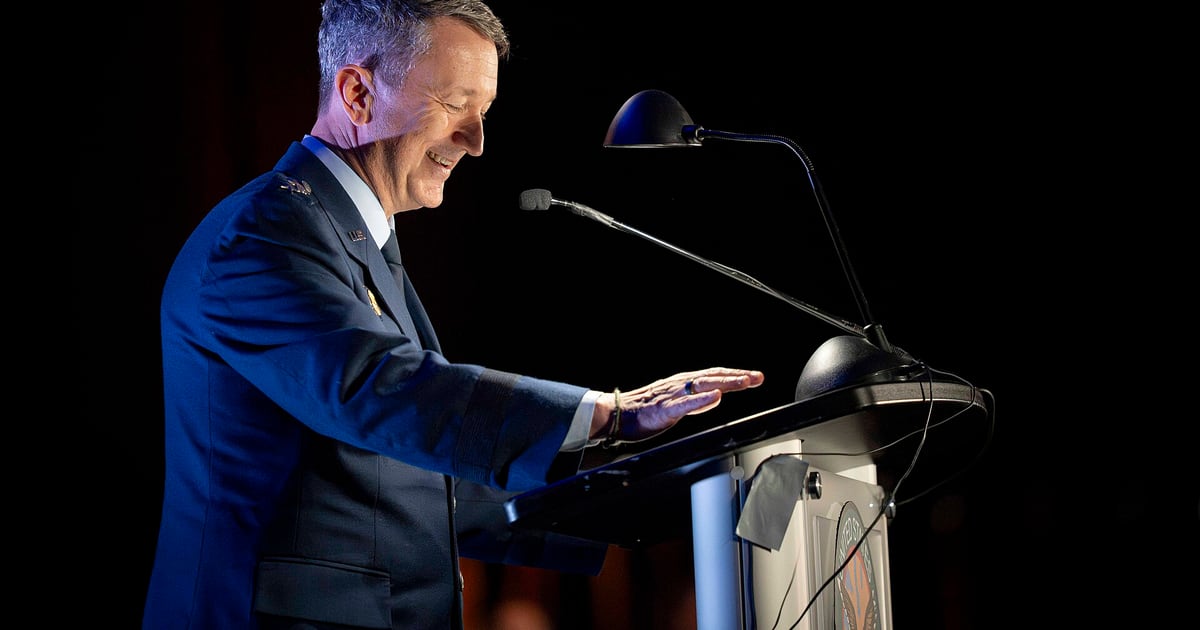
Iran-aligned militias in the Middle East are withholding salaries from their fighters to funnel cash back to Tehran because the Islamic Revolutionary Guard Corps cannot pay its own troops, according to U.S. Central Command Commander Brad Cooper.
Cooper announced the intelligence findings in mid-October 2026, stating that U.S. military strikes and a naval blockade have reversed decades of traditional cash flows between Iran and its regional proxies. According to U.S. officials, military attacks and the blockade of southern Iranian ports have prevented at least $25 billion in Iranian crude exports and frozen roughly $350 million in cryptocurrency assets.
The financial pressure coincides with ongoing naval operations and military strikes. In Washington, Trump raises prospect of striking Iran's Pickaxe Mountain site after midterms, while maritime hostilities continue in the Gulf after Iranian attacks sink two ships in Strait of Hormuz ahead of U.S. election.
Iranian authorities pushed back against the U.S. assessments on Tuesday, Oct. 20, denying that the country's economy is collapsing or that the military apparatus is unable to support its regional allies. On Sunday, Oct. 18, Iranian President Masoud Pezeshkian acknowledged that military actions and the naval blockade have caused substantial economic problems, though he said domestic measures and self-reliance would sustain the country.
Iran's broader economy, where Central Bank of Iran Governor Abdolnaser Hemmati serves among key financial officials, faces double-digit inflation alongside the blockade. The World Bank projected a 7.7 percent economic contraction for Iran in the 2026–27 fiscal year.
For decades, the IRGC Quds Force financed, armed, and trained allied militias across Iraq, Lebanon, and Yemen to project power and assemble weaponry locally. U.S. officials and regional security analysts say the financial dynamics now vary significantly by group. In September 2026, the U.S. Department of the Treasury claimed that the Iraqi militia Kataib Hezbollah siphoned Iraqi state resources to financially assist Iran.
Regional and security analysts, including Michael Knights, head of MENA research at Horizon Engage, and Negar Mortazavi, a senior fellow at the Center for International Policy, note that while Iraqi factions can tap into state budgets and local trade to transfer funds eastward, other proxies cannot. Groups such as Hezbollah in Lebanon and the Houthis in Yemen operate in severely deteriorated domestic economies and remain reliant on Iranian supplies and fuel.
Those proxies have nonetheless remained active across the region, as a Houthi strike hits Saudi Aramco headquarters, officials say, and in Lebanon, Hezbollah claims seized explosives in Lebanon, sparking domestic political fallout.
Assessments of Tehran's ongoing financial transfers to its Lebanese ally remain contested. While an anonymous report cited a $200 million cash transfer from Iran to Hezbollah in September 2026, the U.S. Department of State dismissed claims of recent cash influxes to the group as false.
Why it matters
For decades, the IRGC Quds Force financed, armed, and trained regional militias across Lebanon, Iraq, and Yemen to project Iranian influence. A reversal of those cash flows indicates that U.S. sanctions, military strikes, and the naval blockade are straining Tehran's ability to fund both its own military apparatus and its regional network.
What's next
Questions remain over how much money regional militia factions are transferring back to the IRGC relative to Tehran's total military spending, which specific units have halted fighter pay, and whether financial constraints will force the IRGC to reduce operational support or arms deliveries to the Houthis and Hezbollah.
Sources · 3 reports
Spotted an error? Write to [email protected]. Tags: Iran, IRGC, U.S. Central Command, Hezbollah, Houthis, Sanctions.


