New York appeals court hears arguments on Trump's 34-count felony conviction
Lawyers for President Donald Trump asked a state appellate panel to overturn his May 2024 conviction for falsifying business records.


Listen
The rundown
- Lawyers for President Donald Trump and Manhattan District Attorney Alvin Bragg argued Trump's appeal before a New York state appellate panel on Thursday, Nov. 5, 2026.
- Trump's defense team argued that federal election law preempts the state charges and that prosecutors introduced evidence protected by presidential immunity.
- Bragg's office contended that the prosecution addressed unofficial, private conduct rather than official presidential acts.
- A Manhattan jury convicted Trump in May 2024 on 34 felony counts of falsifying business records connected to a $130,000 payment to Stormy Daniels.
- A federal appellate court is scheduled to hear separate arguments on Monday, Nov. 16, 2026, on Trump's effort to move the case to federal court.
Lawyers for President Donald Trump appeared before a New York state appeals court panel on Thursday, Nov. 5, 2026, to ask judges to overturn his May 2024 criminal conviction on 34 felony counts of falsifying business records. Prosecutors for Manhattan District Attorney Alvin Bragg urged the mid-level appellate court to uphold the verdict.
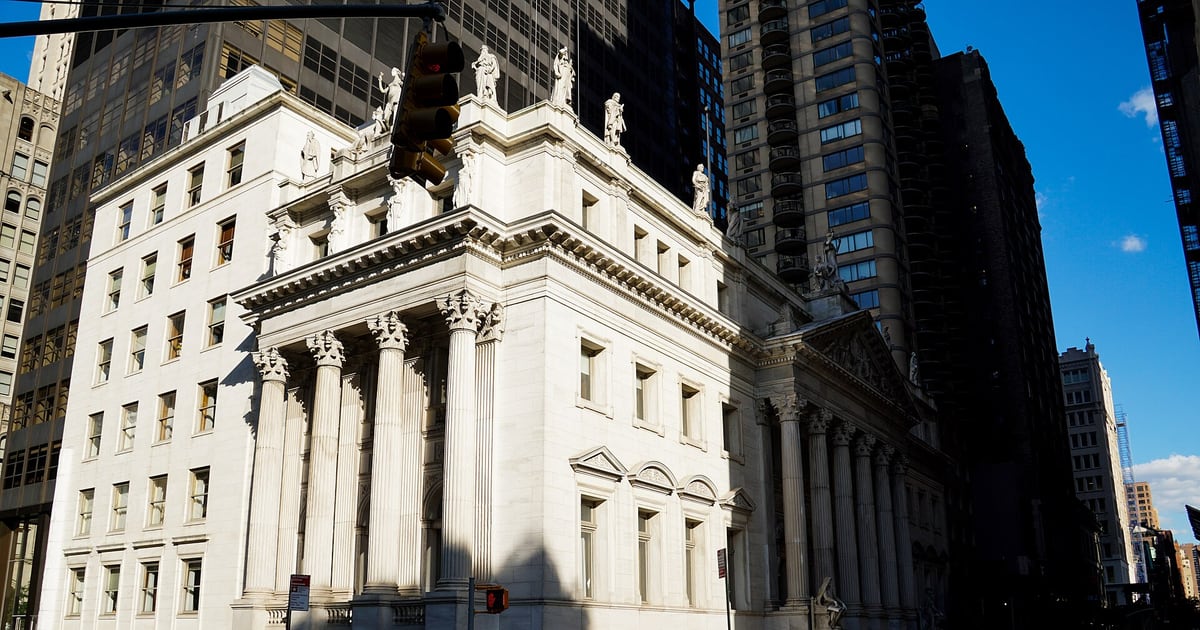
The oral arguments took place before the Appellate Division, First Department. The panel is reviewing whether Trump's conviction can stand following a July 2024 U.S. Supreme Court ruling on presidential immunity.
Trump's defense team argued that the state prosecution should be dismissed because federal election law preempts the state charges. His attorneys also contended that prosecutors violated presidential immunity by introducing official White House actions as evidence during the trial.
Bragg's office asserted that the criminal charges stemmed from unofficial, non-presidential conduct and an unlawful conspiracy to deceive voters and defraud regulators. Prosecutors maintained that the underlying criminal acts constituted purely private conduct that does not qualify for presidential immunity.
In May 2024, a Manhattan jury unanimously found Trump guilty on all 34 felony counts, making him the first former U.S. president convicted of felony crimes. The charges stemmed from Trump's reimbursement of his former attorney, Michael Cohen, for a $130,000 payment made to adult film actor Stormy Daniels before the 2016 election. Trump has consistently denied any wrongdoing and denied having an affair.
In early January 2025, the trial judge sentenced Trump to an unconditional discharge. The sentence left him with a felony conviction, though it imposed no prison time, fines, or other penalties.
Alongside the state appeal, Trump has sought to challenge the conviction through federal channels. In August 2026, U.S. District Judge Alvin Hellerstein rejected Trump's third motion to move the state criminal case to federal court. Hellerstein died in late October 2026, a week before the state appellate arguments.
The criminal appeal proceeds alongside other legal matters involving the president. On Saturday, Oct. 31, 2026, a federal Judge permanently dismisses Trump defamation lawsuit against Wall Street Journal, and in a separate civil case in October, a Judge orders Trump to sit for deposition by Dec. 11 in BBC defamation suit.
Why it matters
The appeal tests whether the U.S. Supreme Court's July 2024 doctrine on presidential immunity invalidates a state felony conviction for conduct that prosecutors say was private, but where defense attorneys say official White House acts were introduced as trial evidence. A ruling in Trump's favor could erase the May 2024 conviction that made him the first former U.S. president convicted of felony crimes.
What's next
The Appellate Division, First Department will consider the arguments and issue a ruling at a later date. Separately, federal appellate arguments are scheduled for Monday, Nov. 16, 2026, regarding Trump's parallel effort to transfer the criminal case to federal court following Judge Hellerstein's August rejection.
Sources · 3 reports
Spotted an error? Write to [email protected]. Tags: Donald Trump, Alvin Bragg, New York, Presidential immunity, Courts.


