UK and nine northern European allies sign pact to counter Russian undersea threats
The Northern Navies Initiative pools autonomous drones, warships, and surveillance data across the North Atlantic, High North, and Baltic Sea.


Listen
The rundown
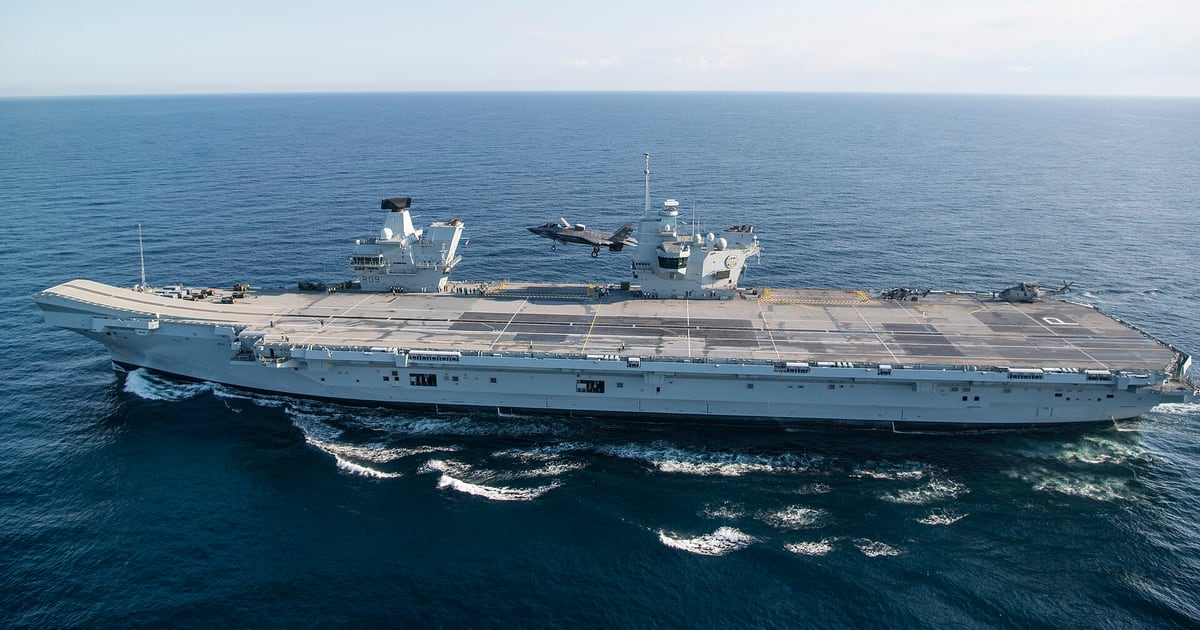
- Ten Joint Expeditionary Force nations signed the Northern Navies Initiative on Tuesday, Nov. 10, aboard HMS Prince of Wales in Oslo.
- The agreement allows allied navies to share port access and hand off control of autonomous maritime drones across the North Atlantic, High North, and Baltic Sea.
- The United Kingdom plans to invest 90 million pounds in artificial intelligence, drones, and sensors to support Royal Navy undersea surveillance.
- British defense officials said Russian naval activity around the United Kingdom rose by 41 percent in the first nine months of the year, while Russia has denied allegations of undersea cable reconnaissance.
The United Kingdom and nine northern European allies formalized a defense pact on Tuesday, Nov. 10, to pool warships, autonomous drones, and surveillance data against Russian undersea threats. Signed aboard the British aircraft carrier HMS Prince of Wales in Oslo, the Northern Navies Initiative links maritime forces across the North Atlantic, High North, and Baltic Sea.
The agreement operates under the Joint Expeditionary Force, a British-led defense coalition established to coordinate rapid military responses across northern Europe and the North Atlantic. The ten member countries are Britain, Denmark, Estonia, Finland, Iceland, Latvia, Lithuania, the Netherlands, Norway, and Sweden.
Under the new framework, allied warships and sensor task groups can hand off control of autonomous drones and use partner ports across the region. To support the effort, the United Kingdom plans to spend 90 million pounds on artificial intelligence, drones, and sensors to assist the Royal Navy with undersea surveillance.
The coalition nations state that closer naval integration, autonomous drone handoffs, and shared port access are necessary to deter mounting Russian hybrid threats against critical undersea infrastructure. According to British defense officials, Russian naval activity around the United Kingdom increased by 41 percent in the first nine months of the year.
Russian officials have denied European allegations of conducting sabotage or undersea cable reconnaissance, stating that they have no interest in Western subsea cables. The Oslo signing follows several reported maritime security incidents throughout 2026.
In April 2026, British naval and air assets tracked three Russian submarines near North Atlantic undersea infrastructure for over a month. In September 2026, a report disclosed that United States, British, and Norwegian forces had previously disrupted an unconfirmed Russian deep-sea test near the Svalbard archipelago aimed at severing underwater cables. An October 2026 investigation subsequently revealed that 17 Russian fishing vessels executed more than 500 suspicious movements near critical undersea communication lines.
Protection of undersea pipelines and fiber-optic communication cables has become a primary European defense priority following recurring hybrid security incidents and rising regional naval tension. That focus comes even as German prosecutors accuse Ukraine of Nord Stream pipeline sabotage as trial opens in a German court on Wednesday, Oct. 14, regarding an earlier underwater bombing.
Maritime security concerns have also grown in southern European waters, where Black Sea drone strikes on commercial ships prompt diplomatic summons and inquiries after attacks off Bulgaria on Tuesday, Oct. 13, and a tanker fire in Romanian territorial waters on Wednesday, Oct. 14. Meanwhile, Britain is co-leading a separate military effort in which European troops to rehearse postwar Ukraine deployment in Poland from Monday, Nov. 9, to Sunday, Nov. 22, testing logistics and command systems for a force focused in part on securing air and sea routes.
Why it matters
Protection of undersea pipelines and fiber-optic communication cables has become a primary European defense priority following recurring hybrid security incidents and rising regional naval tension. By linking autonomous systems and port access across ten nations, the Joint Expeditionary Force aims to monitor and deter potential sabotage across three strategic seas.
What's next
The ten member navies face technical and operational questions over how rapidly they can establish unified protocols to exchange real-time control of autonomous uncrewed vessels. Allied governments also have yet to clarify whether the pooled maritime initiative will operate primarily as an independent regional framework or transition formal command structures into NATO, as well as what operational thresholds member states will use to respond if a hostile nation damages non-military subsea infrastructure.
Sources · 3 reports
Spotted an error? Write to [email protected]. Tags: United Kingdom, Russia, Joint Expeditionary Force, European security, Maritime security.


