Somalia's Supreme Court strikes down Mohamud's term extension
Judges ordered national elections within 90 days and voided the president's attempt to dismiss the chief justice.


Listen
The rundown
- Somalia's Supreme Court ruled on Thursday, Nov. 5, that President Hassan Sheikh Mohamud's one-year term extension was unlawful and ordered elections within 90 days.
- The court declared Mohamud's decision a day earlier to dismiss Chief Justice Bashe Yusuf Ahmed and replace him with Ibrahim Idle Suleiman null and void.
- Former Prime Minister Hassan Ali Khaire accused the president of deploying troops to the court compound to detain and torture judicial officials, though news agencies could not independently verify a raid.
- Opposition factions and the regional administrations of Puntland and Jubaland have rejected the electoral commission's schedule for elections in April and May 2027.
- Mohamud has convened national talks from Nov. 14 to Nov. 18 to address the political deadlock.
Somalia's Supreme Court ruled on Thursday, Nov. 5, that President Hassan Sheikh Mohamud's one-year term extension was unlawful, ordering political leaders to agree on an electoral pact within 30 days and hold national elections within 90 days. The court determined that constitutional amendments passed earlier in 2026 could not apply retroactively to Mohamud's mandate, which expired in May.
The ruling directly challenged a move from the presidency a day earlier. On Wednesday, Nov. 4, the presidency announced the dismissal of Chief Justice Bashe Yusuf Ahmed over judicial performance concerns and appointed former chief justice Ibrahim Idle Suleiman to replace him. In its Thursday decision, the Supreme Court presided over by Ahmed declared the dismissal null and void, ruling that the president lacked the constitutional authority to fire the chief justice.
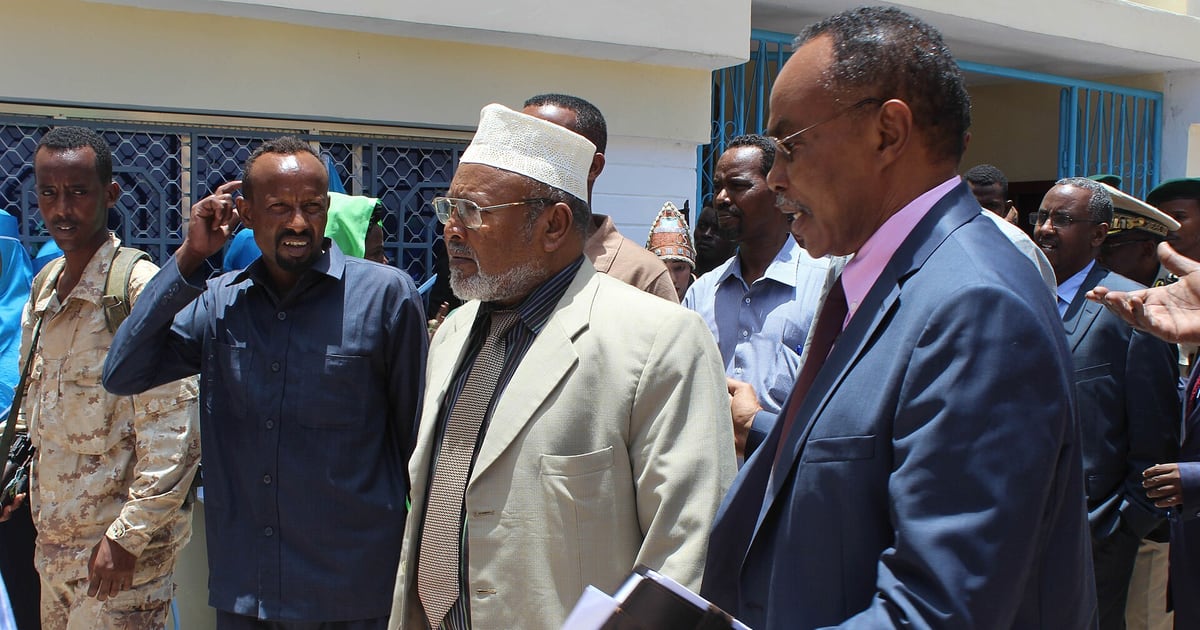
Following the court's decision, opposition leaders accused the administration of using force against the judiciary. Former Prime Minister Hassan Ali Khaire alleged that Mohamud deployed troops to the Supreme Court and pursued judicial officials for arrest and torture. While images in Somali media showed military personnel inside the court compound, news agencies could not independently verify the reported raid.
Opposition factions and the regional administrations of Puntland and Jubaland oppose the federal government's election calendar. They view the president's moves as an unconstitutional power grab and accuse the administration of attempting to dismantle the judiciary by deploying troops against the court.
The federal presidency maintains that the constitutional revisions and the one-year transition period are necessary to shift Somalia from an indirect clan-based voting system to direct democratic elections. Under that framework, the national electoral commission set parliamentary elections for Thursday, April 15, 2027, and presidential elections for May 2027. The presidency also maintained that replacing Ahmed was required to ensure an effective judiciary.
The dispute traces back to March 2026, when Somalia's parliament approved constitutional amendments to restructure national elections amid an opposition boycott. When Mohamud's four-year term expired in May, his government enacted a one-year extension citing the new legal framework. The disagreement over the constitutional changes led to violent clashes between political factions in Mogadishu in June.
Somalia has not held nationwide direct elections since 1969, relying instead since 2012 on an indirect model where clan elders select representatives. The country has experienced civil conflict for more than 30 years and continues to fight an insurgency by the al-Qaeda-linked group al-Shabaab, which controls wide rural regions.
The constitutional standoff comes amid growing strain on external security support, including foreign funding cuts to international missions and troop withdrawal plans by partner countries such as Uganda, a shift examined in our coverage as the UN closes Somalia mission after three decades as Ugandan troops begin withdrawal.
Why it matters
The ruling creates a direct clash between the presidency and the judiciary over who holds legitimate authority in Somalia after May 2026. The political standoff unfolds as the country combats an ongoing al-Shabaab insurgency across rural regions and faces declining foreign funding for international security missions and troop withdrawal plans by partners like Uganda.
What's next
President Mohamud has convened national talks scheduled from Saturday, Nov. 14, to Wednesday, Nov. 18, to address the political deadlock. It remains unclear whether opposition leaders and regional administrations will attend the talks, which chief justice the legal system will recognize, or whether the administration will comply with the court's 30-day pact and 90-day election deadlines instead of its April and May 2027 schedule.
Sources · 3 reports
Spotted an error? Write to [email protected]. Tags: Somalia, Hassan Sheikh Mohamud, Supreme Court, Elections, East Africa.


