North Korea fires missiles into Sea of Japan and rejects U.S. talks
Senior official Kim Yo Jong dismissed dialogue with Washington and denied FBI allegations of a $6 billion cryptocurrency theft as Pyongyang conducted its fourth weapons launch in a month.


Listen
The rundown
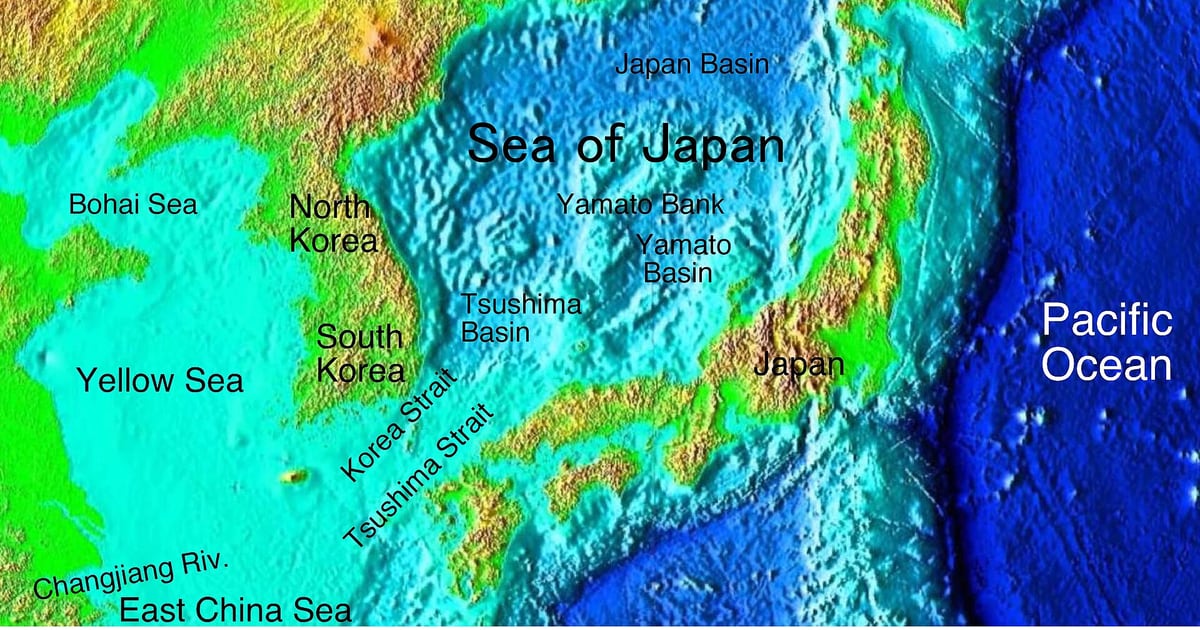
- South Korea's Joint Chiefs of Staff detected several North Korean missiles launched from the eastern Sondok area into the Sea of Japan on Wednesday, Nov. 4.
- Senior North Korean official Kim Yo Jong announced that Pyongyang will not resume dialogue with the United States while Washington maintains what she termed a hostile policy.
- North Korea dismissed Federal Bureau of Investigation allegations that the North Korean hacking group TraderTraitor stole more than $6 billion from the Binance cryptocurrency exchange.
- The launches mark Pyongyang's fourth weapons test in a month and follow joint air defense and nuclear-readiness exercises by the United States, South Korea, and Japan.
North Korea fired several missiles toward the Sea of Japan on Wednesday, Nov. 4, hours after senior North Korean official Kim Yo Jong rejected the resumption of diplomatic talks with the United States.
South Korea's Joint Chiefs of Staff detected the missiles launching from the eastern coastal area of Sondok. The launch marked Pyongyang's fourth weapons test within a month and followed days of military demonstrations and rhetorical exchanges across the Korean Peninsula.
Early on Wednesday, Nov. 4, Kim, the sister of North Korean leader Kim Jong Un, announced that Pyongyang has no intention of sitting down for dialogue with Washington. According to Kim, North Korea refuses to hold talks as long as the United States maintains what she described as an invariable hostile policy.
Kim pointed to recent findings by the Federal Bureau of Investigation as an extension of that policy. The FBI accused the North Korean hacking group TraderTraitor of stealing more than $6 billion in digital assets from the cryptocurrency exchange Binance. North Korea dismissed the theft allegations as a trite provocation.
The Wednesday launch builds on a week of escalating military activity. On Monday, Nov. 2, North Korea claimed it tested a new cluster warhead for strategic cruise missiles capable of destroying an area of 5 to 6 hectares. Pyongyang stated then that joint South Korean and American nuclear-readiness drills proved the necessity of strengthening its own nuclear deterrent.
On Friday, Oct. 30, North Korean state media similarly denounced joint South Korea-United States air defense exercises, while South Korea pledged a firm response to border breaches. A day earlier, on Thursday, Oct. 29, North Korea fired missiles amid an ongoing dispute over a border landmine explosion on Monday, Sept. 21, that wounded three South Korean soldiers. Earlier in October, as tensions over the mine blasts grew, North Korea threatens to restart border broadcasts and deploy weapons along the front line after denying Seoul's attribution of responsibility.
The United States, South Korea, and Japan continue to maintain joint defensive drills and monitor North Korea's weapons launches. On Saturday, Oct. 31, the three allied nations issued a joint call for the complete denuclearization of the Korean Peninsula.
North Korea maintains that international sanctions and demands for denuclearization are ineffective, arguing that allied military exercises require Pyongyang to expand its nuclear deterrent. U.S. President Donald Trump has expressed an interest in meeting Kim Jong Un, though bilateral diplomatic summits between the two leaders ended without an agreement in 2019 due to disagreements over North Korea's nuclear arsenal. Since the 2019 talks collapsed, Pyongyang has expanded its weapons program through tests of hypersonic missiles, submarine-launched ballistic missiles, attack drones, and cluster warheads.
Why it matters
The pairing of a fourth weapons test in a month with an explicit rejection of dialogue underscores the deadlock on the Korean Peninsula. While the United States, South Korea, and Japan continue to demand complete denuclearization and conduct joint defensive exercises, North Korea cites those drills and U.S. law enforcement actions as justification to avoid talks and expand its nuclear and conventional arsenals.
What's next
South Korean and U.S. defense officials are analyzing the specific missile models launched from the Sondok area on Wednesday, Nov. 4. Observers are watching to see how international regulators and law enforcement agencies respond to the FBI's $6 billion Binance theft allegations against TraderTraitor, and whether Washington and Pyongyang establish any bilateral contact before the end of 2026 despite Kim Yo Jong's refusal.
Sources · 3 reports
Spotted an error? Write to [email protected]. Tags: North Korea, South Korea, United States, Kim Yo Jong, Nuclear weapons, Cryptocurrency.


